


Highway Legends: Car Racing 3D
4.723.00 Reviews
App Specs
- Version
- 2.4.4
- Updated On
- License
- Free
- Downloads
- 500,000+
- Developer
- liamsoft
- Categories
- Racing
- Platform
- Android
Screenshots

 Analysis by AppCompare
I like racing games that let me settle into a quick drive without turning every session into a long commitment. Highway Legends: Car Racing 3D aims for that kind of city-and-highway traffic experience, with the appeal centered on steering through busy roads and building confidence behind the wheel. My recommendation comes with a caveat: the idea is easy to understand, but whether it suits you depends on how much you enjoy repeating traffic runs and refining your driving rather than following a deep racing campaign.
Finding a reliable rhythm on the road
I find it helpful to treat each return to the road as a fresh read rather than assuming yesterday’s habits will carry over. A brief, low-pressure run can show whether your steering still feels comfortable and whether you are spotting openings early enough. Once that rhythm settles, the next section looks at how a few deliberate choices can make practice feel more consistent.
Start with a simple baseline
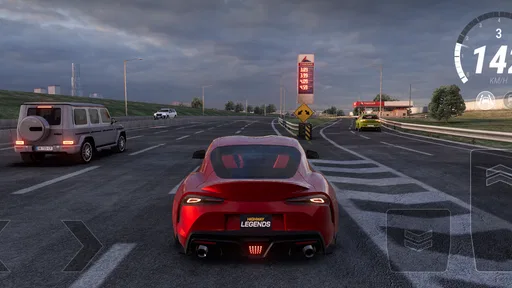
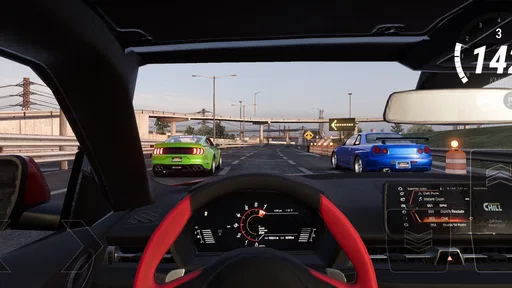
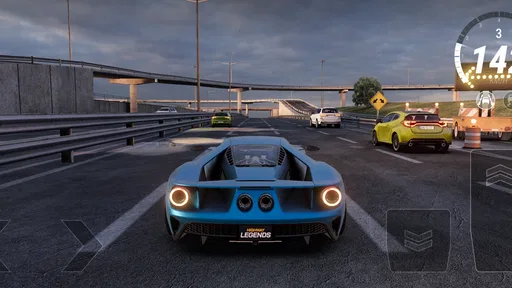
When I try a traffic-driving game, I resist the urge to chase risky moves straight away. I first focus on keeping a predictable line, watching the space around the car, and making small corrections rather than darting between vehicles. That approach is especially useful in Highway Legends, where the central challenge is reading traffic and deciding when a gap is actually safe—not merely when it looks tempting for a second.
For a first session, treat each run as practice rather than a test of nerve. Learn how your chosen controls respond, notice how much steering input is needed, and avoid changing several things at once. If you begin with aggressive weaving, it is hard to tell whether a mistake came from your timing, your steering, or simply taking a gap that was too tight. A calmer baseline gives you something repeatable to improve.
The game is a free racing title from liamsoft, and its focus is more approachable than a simulation built around detailed vehicle setup or formal racecraft. That makes it a reasonable choice for a short break: open it, drive for a while, and use the traffic itself as the challenge. I would not approach it expecting the structured progression or varied event formats that often define larger racing games.
Make the controls work for your habits
One practical habit is to settle on a control style before trying to improve your consistency. If the available control choices do not feel natural immediately, take a low-pressure drive to test them instead of judging the game by one awkward attempt. The goal is to find a setup that lets you make corrections without overreacting. A control method that feels comfortable on a straight road may still be tiring when you need to steer repeatedly, so pay attention to both precision and comfort.
I also recommend keeping your attention on the road ahead rather than fixating on the car directly in front of you. In traffic, the useful decision is often made before the nearest obstacle becomes urgent: scan for a clear route, keep a little room to adjust, and avoid committing to a pass when another vehicle could close the opening. This is not a special trick; it is a repeatable way to make the game’s core driving loop feel less chaotic.
Worth Reading Before You Choose

Flipboard Shows What News Apps Must Do Beyond the Feed

Switching to Android Auto Means Rethinking Your Driving Routine

Google Calendar Makes a Crowded Week Easier to Manage

Ludo King Makes the Most of the Minutes Between Plans

Baby Panda World Brings Quick Play to Modern Phones, but Its Game Library Feels Busy

ESPN’s Live Game View Makes Following Close Games Easier
A realistic use case is a few minutes of play while waiting for a ride or taking a break between tasks. In that setting, a steady run is more satisfying than restarting repeatedly after every risky move. If you have only a short window, pick one thing to work on—smoother steering, better gap selection, or fewer last-second corrections—then stop when you have made that small improvement. That gives each session a purpose without demanding a long commitment.
Check settings before chasing better runs
Before settling into repeated drives, I would check the available settings for control options and visual comfort. This is a small step, but it can prevent a frustrating pattern: blaming your reactions when the real problem is that the controls do not suit your hands or the display is difficult to read in your current environment. Make one adjustment at a time, then drive long enough to judge it fairly.
Think about where you play, too. If you are holding your phone one-handed, a control arrangement that requires frequent, precise inputs may feel less comfortable than it does at a desk or with both hands free. If you play in short bursts, prioritize immediate clarity and ease of steering over a setup that takes time to master. I would not assume that a single setting is best for every player; comfort and consistency matter more than copying another person’s preference.
Because the title is free to install but includes optional in-app purchases, I would also make a deliberate choice about spending before a session turns into an impulse decision. Individual purchases range from $0.99 to $49.99. You can enjoy trying the game without treating a purchase as a requirement. If you are considering one, first decide what you want it to improve and whether that benefit matters to your own routine; the price range makes it sensible to pause rather than tap through casually.
Build faster patterns without driving recklessly
Once the basic handling feels familiar, improvement comes from making fewer rushed decisions, not simply steering more aggressively. I find it useful to repeat the same mental sequence: look for a viable opening, check whether the route remains clear, then move smoothly. If the gap disappears, abandon the attempt instead of forcing it. That habit is less dramatic than weaving at every opportunity, but it makes your driving more controlled and helps you identify what actually caused a collision.
Another useful pattern is to separate observation from correction. Watch the traffic flow for a moment, then make one measured input rather than continuously nudging the car in several directions. Oversteering can turn a manageable situation into a scramble, especially when you are reacting to nearby vehicles. When a run goes badly, replay the moment in your head: did you choose a narrow gap, react too late, or make a correction larger than necessary? That quick review is more actionable than simply deciding the game is unfair.
Experienced players can also make sessions repeatable by changing only one goal at a time. For example, spend one run concentrating on smooth lane changes and another on leaving more room around traffic. Do not try to improve speed, control, and risk-taking all at once. This approach is useful in a game built around driving through traffic because it turns repetition into practice instead of making every run feel like the same attempt with a different outcome.
Where it sits beside other racing games
Compared with a conventional circuit racer, Highway Legends puts the emphasis on navigating traffic rather than learning a fixed course, managing a race strategy, or competing through a long series of events. That makes it a better fit for players who want a direct driving challenge and a less suitable choice for someone looking for a substantial career mode. It also differs from a pure driving simulator: I would come to it for accessible road action, not to reproduce every detail of real-world driving.
That narrower focus is both its appeal and its limit. If you enjoy judging openings and trying to make a cleaner run, the premise gives you a reason to return. If you need frequent changes of scenery, a wide range of race types, or meaningful vehicle tuning to stay interested, a broader racing game is likely a better match. Highway Legends is strongest when you are happy to work on the same basic skill from one drive to the next.
Know the limits before you commit
The main friction is that traffic-focused driving can become repetitive if the act of reading gaps is not satisfying to you. There is a difference between a simple loop that feels relaxing and one that feels thin; your reaction will depend on whether you enjoy self-directed improvement. I would skip it if you want a narrative campaign, a clearly structured competitive season, or a detailed garage-management experience. Those expectations point toward a different kind of racer.
It is also worth keeping the rating in perspective. The game has a 4.6 average from around 2.1 thousand ratings, with more than 500 thousand installs. Those figures suggest that plenty of players have tried it, but they cannot tell you whether its particular driving loop will hold your attention. The age rating is Everyone, so it is positioned for a broad audience; as always, I would still make purchase decisions thoughtfully, especially if younger players use the device.
The current version is 2.4.4, and the game first appeared on August 28, 2024. It requires Android 7.1 or later. Those details make it easier to judge basic compatibility, but the more important decision is personal: do you want an accessible traffic-driving game you can dip into, or a racer with a wider range of systems? If the latter is what keeps you engaged, this is probably not the right place to invest your time.
My verdict for players who like repeatable drives
I would recommend Highway Legends to someone who enjoys quick, focused driving sessions and finds satisfaction in making calmer, cleaner decisions through traffic. The best way to get more from it is to establish comfortable controls, keep a modest goal for each run, and treat a missed opening as a cue to wait rather than a reason to force a pass. Those habits make the central challenge easier to read and give repeated sessions a little more purpose.
Highway Legends is most rewarding when you enjoy the drive itself more than a long checklist of unlocks or events. It is free to try, while optional purchases are available, so I would begin without spending and see whether the traffic rhythm suits you. If it does, the game can work as an easy pick-up-and-play racer. If you quickly want new race formats, deeper progression, or more demanding simulation, I would choose a different racing game instead.
For me, that makes it a modest but clear recommendation rather than an all-purpose racing pick. Its appeal rests on one straightforward loop: observe, choose a gap, steer with intention, and learn from the result. Give it a few unhurried drives before deciding. If improving that loop feels enjoyable, you have found the right kind of road challenge; if every run feels like repetition without progress, there is little reason to push through.
A quick routine for returning players
When I return after a few days away, I would not judge my first attempt against my best one. I would use a short warm-up to reacquaint myself with the steering, then choose a single target for the next drive. That simple reset helps separate rusty reactions from the game’s actual difficulty and keeps a brief session from turning into a string of frustrated retries.
It also gives the game a useful place in an everyday routine: a couple of focused attempts while waiting for a coffee or winding down after work, rather than an activity that needs a planned evening. If you notice that you keep playing only because you expect the next run to feel different, pause and ask whether improving your decisions is still enjoyable. That is a better test of staying power than chasing an arbitrary personal best.
Who will get the most from its focused loop
I think the strongest audience is someone who wants a straightforward driving challenge on a phone and is happy to measure progress by control and judgement. It can also suit younger or newer players looking for an accessible racing game, though an adult should manage any purchase decisions on a shared device. The broad Everyone age rating makes it easy to consider for a family device, while the optional spending is still worth discussing beforehand.
On the other hand, I would steer away if your ideal racer needs a visible ladder of goals, a large choice of modes, or a convincing simulation feel. Those are not small preferences; they change what makes a racing game satisfying. A circuit-focused alternative is the better choice when you want to learn a track and compete over a defined event, while a deeper simulator fits players who enjoy tuning and realistic handling. This game makes more sense when the traffic itself is enough to hold your attention.
Small decisions that make sessions easier to judge
One trade-off I keep in mind is that a more cautious style may feel slower, even when it produces cleaner driving. If the run is becoming tense, I would prioritize a clear route over squeezing through an opening just to keep momentum. Conversely, if cautious play starts to feel dull, try making your next goal more specific—such as smoother corrections—rather than simply taking greater risks. That changes the challenge without pretending the game has a hidden progression system.
Before installing, the practical checks are simple: make sure your device runs Android 7.1 or later, remember that the game is free with optional purchases, and consider whether a traffic-based loop is what you want from a racing game. It has reached over 500 thousand installs and a 4.6 average, but popularity is only a starting point for deciding whether its particular rhythm suits you. I would try it with no spending, settle on comfortable controls, and give the core activity a fair, unhurried test.
That is ultimately why I see Highway Legends as a focused option rather than a universal recommendation. Its best moments come from reading the road early and making a deliberate choice, not from collecting a long list of activities. If that modest skill loop sounds appealing, it is easy to see why players return to it; if you want a steady supply of new objectives, another racing game will serve you better.
Pros
- Offers a variety of cars to unlock and drive.
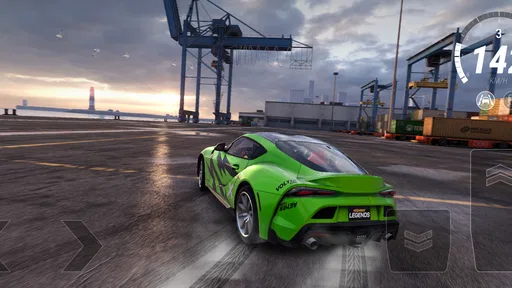
- 3D environments add visual depth to races.
- Quick races suit short play sessions.
- Arcade-style handling is easy to pick up.
- Progression gives players goals beyond each race.
Cons
- Frequent ads may interrupt the racing experience.
- Upgrade progression can feel grindy.
- Handling may lack precision at high speeds.
- Race variety may become repetitive over time.
- Performance can vary across older devices.
FAQs for Highway Legends: Car Racing 3D
What kind of game is Highway Legends: Car Racing 3D?
Highway Legends: Car Racing 3D is a mobile driving game focused on racing through busy roads and avoiding traffic. Players can steer, accelerate, and try to maintain control while passing other vehicles, with progression typically tied to completing runs or objectives. Its appeal is the quick, arcade-style action rather than realistic driving simulation. Check the store listing for the current modes and features available in your version.
Can I play Highway Legends: Car Racing 3D offline?
Whether the game works without an internet connection can depend on its current version and which features you want to use. Basic driving may be available offline, while advertisements, online events, cloud saves, or other connected features may require access to the internet. If offline play matters to you, check the app’s store description and test the game before relying on it during travel or in places without a connection.
Is Highway Legends: Car Racing 3D free to download, and does it include in-app purchases?
The game may be offered as a free download, but that does not necessarily mean every feature or item is free. Mobile racing games commonly include advertisements and optional purchases, such as currency, upgrades, or ways to speed up progression. Availability and pricing can vary by platform, region, and version. Review the Google Play or App Store listing, including its in-app purchase details, before downloading or making a purchase.
What should I check before installing the game on my phone or tablet?
Before installing Highway Legends: Car Racing 3D, confirm that your device meets the operating system and hardware requirements shown on its store page. Racing games with 3D graphics may run less smoothly on older devices, and installation or updates require available storage and a stable connection. Also review the requested permissions and the app’s privacy information, particularly if you want to understand how data or advertising identifiers may be handled.
Is Highway Legends: Car Racing 3D suitable for children?
Suitability depends on the child’s age, comfort with fast-paced traffic and racing gameplay, and the way the game handles advertising or purchases. The driving action is presented as an arcade game, but store ratings and content descriptions can differ between regions and change over time. Parents should check the current age rating, review in-app purchase and ad information, and use device-level purchase controls where appropriate.


